Current Drought Information
Drought is a recurring part of life in Jackson County, and staying informed is the first step toward preparing for changing conditions. JSWCD has assembled current drought information, practical WaterWise guides, and educational resources to help residents prepare and respond throughout the season. Explore the latest drought updates below, find guidance tailored to your situation, check back for upcoming WaterWise webinars listed at the bottom of this page and on our calendar, and follow us on social media for local updates and water-saving tips.
For local Water Saving Tips and Weekly Watering Recommendations:
For irrigation customers and landowners, Medford Irrigation District provides local drought updates, water supply information, and irrigation-related notices for the current season.
Drought conditions can change throughout the season. You can use Drought.gov to check current conditions in Jackson County and throughout the state, then explore our WaterWise guides for simple steps you can take at home, on your land, or in your community.
Drought and Water Availability Conditions Webinar Recording
This webinar provides an overview of current drought and water availability conditions in the Inland Rogue, including how drought is monitored, how Oregon drought declarations work, and where residents, land managers, water users, and community partners can find reliable water supply information.
Topics covered include drought conditions and outlooks, streamflow and reservoir information, ORS 536 and ORS 401 drought/emergency declarations, water right drought tools, groundwater and streamflow data, county drought response, and emergency preparedness resources.
See the rest of the Inland Rogue Water Webinar Series here:
2026 Inland Rogue Water Webinar Series - Jackson Soil and Water Conservation District
or view the YouTube Playlist
Don't Forget About Snowpack
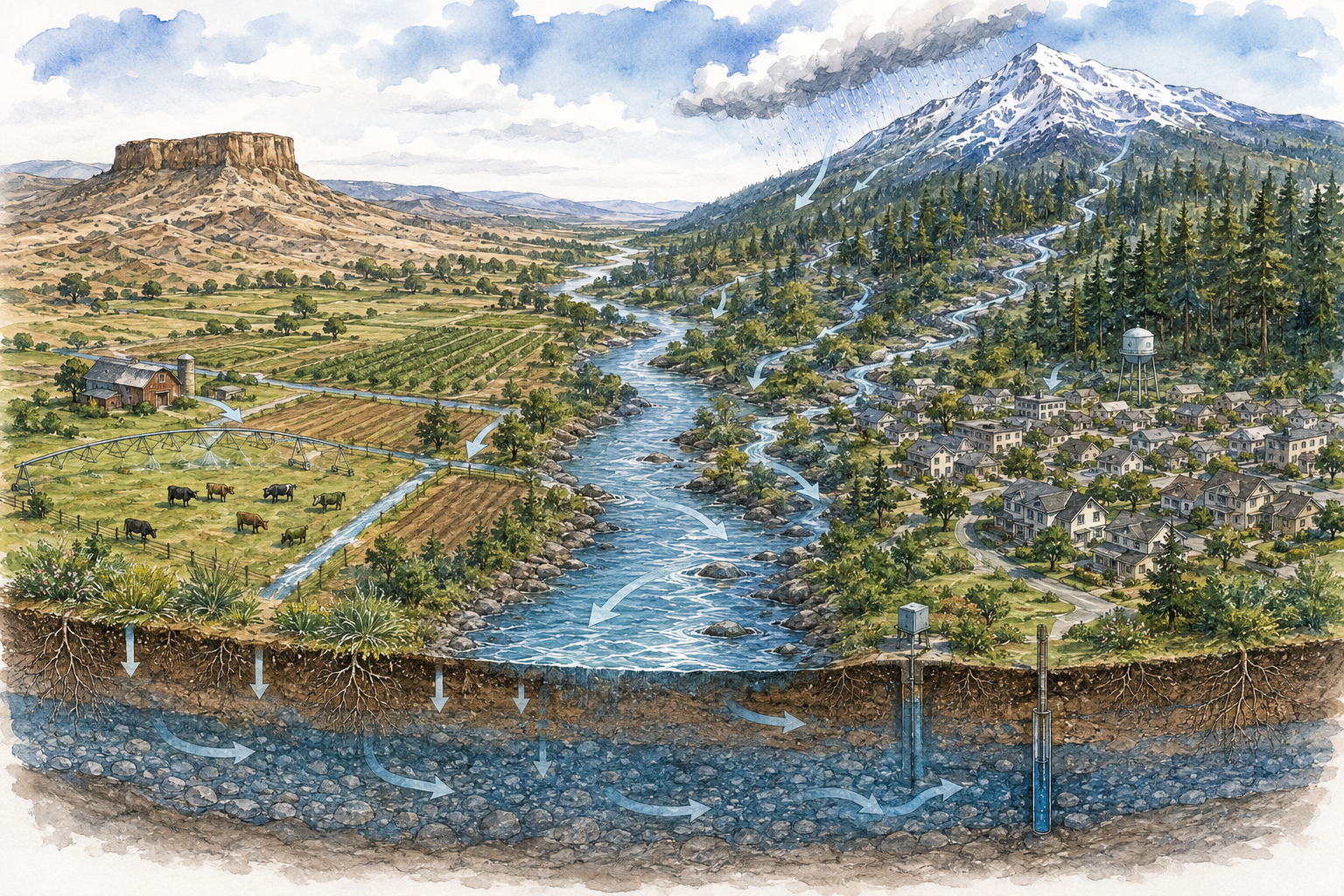
Snowpack is one of Jackson County’s natural water savings accounts. Snow water equivalent, or SWE, tells us how much water is stored in snow if it melted. Drought.gov has many useful drought indicators, but snowpack is worth checking separately. USDA NRCS basin plots help show whether Oregon is building enough water supply before the dry summer season.
In Jackson County, most precipitation comes in winter, but water demand is highest in summer
Snow Water Equivalent, or SWE
- Shows how much water is stored in the snowpack.
- Helps estimate how much water may flow into streams, reservoirs, and irrigation systems as snow melts.
- Low SWE can be an early warning sign for summer drought.
Precipitation
- Shows how much rain and snow has fallen since the water year began on October 1.
- Helps show whether a basin is getting normal, above-normal, or below-normal moisture.
- A basin can have normal precipitation but still have low snowpack if storms are warm and fall mostly as rain.
Average Daily Temperature
- Helps explain whether precipitation is falling as rain or snow.
- Warmer temperatures can melt snow earlier and increase water use by plants.
- Early snowmelt can lead to lower streamflows later in summer.
Everyone can help
Small actions add up, especially during hot, dry months.
- Fixing leaks
- Shortening showers
- Reducing lawn watering
- Watering early or late
- Using mulch around plants
- Choosing drought-tolerant landscaping
- Watching for local watering rules
Find the Right WaterWise Guide:
Click Here or Scan the QR code to view the full series of guides: